
Accountant Lawyers
Accountants in Ontario are monitored by Chartered Professional Accountants of Ontario (CPA Ontario). The practice of accounting in Ontario is governed by the Chartered Professional Accountants of Ontario Act. The CPA has no discretion regarding whether or not to investigate a complaint. Their mandate dictates that they must investigate where it is within their legal authority to do so.
If you have received a complaint from the Chartered Professional Accountants of Ontario it is important to take it very seriously. CPA Ontario has the authority to prosecute members, including those not currently practicing and has the power to revoke, suspend, or limit the membership of any registered member. CPA Ontario may also impose fines upon their members.
Donich Law has experience representing regulated professionals throughout the province of Ontario. We have worked with various regulatory bodies including the College of Teachers of Ontario, Ontario College of Nurses, Chartered Professional Accountants of Ontario, Royal College of Dental Surgeons of Ontario, and the Ontario College of Pharmacists. We combine litigation and risk management strategies to achieve the best possible results for our clients.
- CP24: Civil Sexual Assault Lawsuit at St. Michael’s in Toronto.
- Global News Morning Show: Sentencing Arguments in Assault case of Dafonte Miller.
- Breakfast Television: Role of Mental Health in Court Proceedings.
- Global News National: Bruce McArthur will not serve consecutive sentences.
- CBC Radio: Interview with Mayor John Tory and Jordan Donich on CBC Radio.
- CTV News National: Handgun ban supported by majority of Canadians: Nanos survey.
- Global News: How difficult is it to get a legal handgun in Canada.
- CP24: Sentencing Hearing for Chair Girl.


What will Happen if I Receive a Complaint with CPA Ontario?
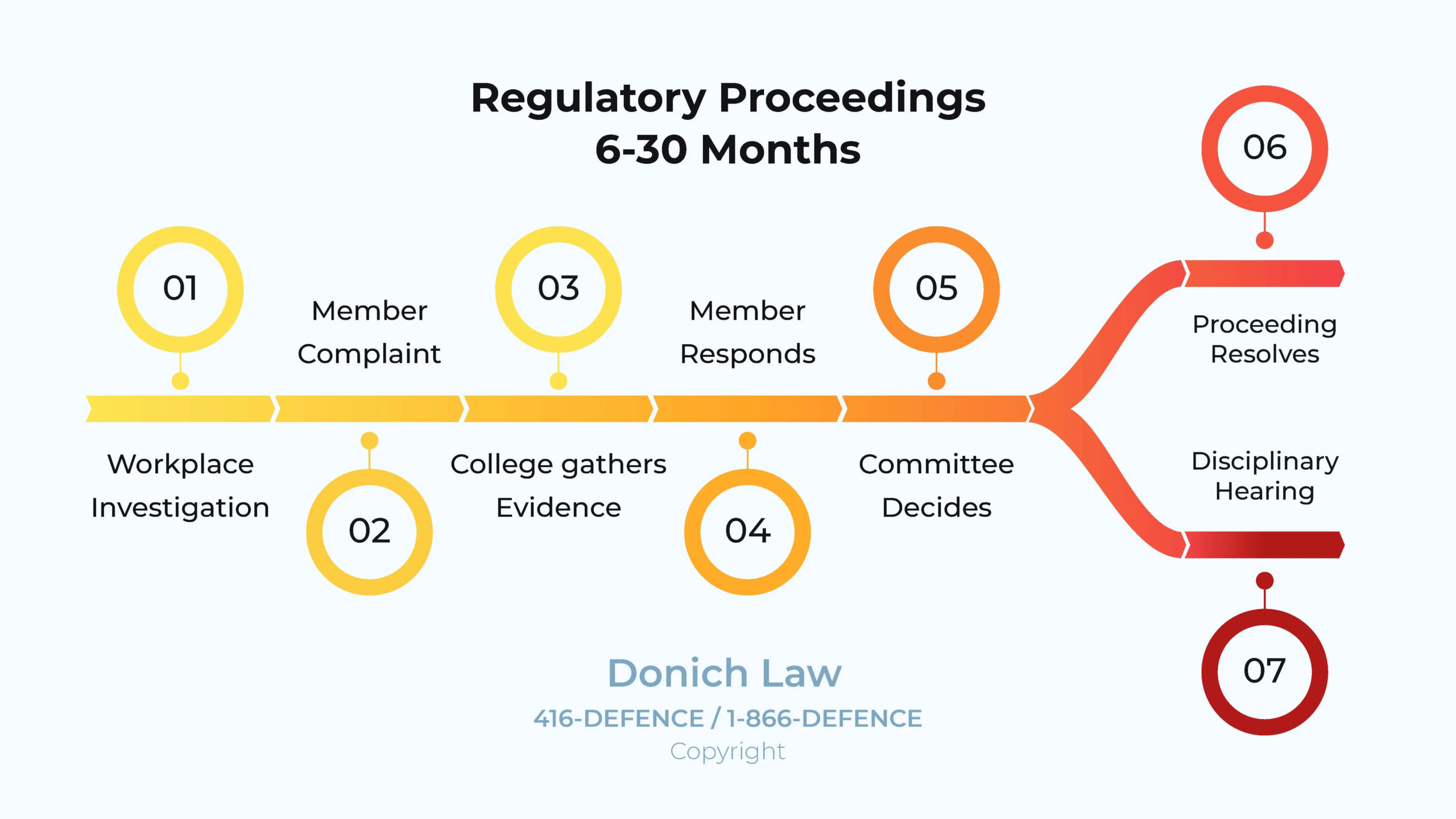
Chartered Professional Accountants of Ontario are responsible for investigating complaints made against their members, and for prosecuting members who have committed professional misconduct. Virtually any member of the public who has had contact with registered accountant may make a complaint to CPA regarding the member’s practice. Complaints may be based on various issues including but not limited to improper billing practices, improper record keeping, fraud, or other criminal activity.
Once a complaint is made with CPA Ontario, their Standards Enforcement team will review the complaint to determine whether an investigation should be carried out. CPA Ontario must investigate all legitimate complaints where they have the jurisdiction to do so. This is discussed in more detail in the next section.
Next, the investigation will be carried out by the Standards Enforcement Department. The role of the Standards Enforcement Department is to act as impartial, unbiased investigators gathering all relevant information on a matter. The investigator will collect all relevant documentation and may talk to potential witnesses including the member or anyone else that has pertinent information on the matter. Once the investigation is complete, the evidence will be sent to the member who will be provided an opportunity to respond to the allegations and to the evidence collected. It is especially important that the member retain the services of counsel for this portion of the complaint process. The submissions provided on behalf of the member will be the member’s opportunity to provide their side of things. Once the investigation is complete, the file will be referred to the Professional Conduct Committee for review.
Once the member’s response has been received and the Professional Conduct Committee has reviewed all the evidence including the member’s response, they will determine the appropriate next steps. The Committee may choose to resolve the matter without referring it to the Discipline Committee. Resolution at this stage is not considered a formal finding of professional misconduct.
Where the matter is referred to the Discipline Committee, formal disciplinary proceedings will be initiated against the member. The member may choose to plead guilty to some or all of the allegations, or fight the allegations. Where the member chooses to fight the allegations, a formal hearing will be held.
It is important to cooperate with CPA Ontario and participate in their investigation if a complaint is filed against you. Failure to do so could result in a finding of professional misconduct and a hearing before the Discipline Committee.
How does CPA Determine which Complaints they will Investigate?
When reviewing a new complaint, the Standards Enforcement Department will consider three issues.
Firstly, they will determine whether CPA Ontario has jurisdiction to investigate the complaint. CPA Ontario will have jurisdiction where the complaint is made against a member, and the issue that is the subject of the complaint occurred while the accountant was registered with CPA Ontario. CPA Ontario may not have jurisdiction where the member was not registered at the time of the alleged misconduct. Where staff in the Standards Enforcement Department conclude that CPA Ontario does have jurisdiction, they will move on to the next step. If they lack jurisdiction, the file should be closed as CPA Ontario will have no authority to investigate further.
Secondly, where jurisdiction exists, the Standards Enforcement Department will consider whether the actions noted in the complaint can be considered misconduct. Staff will review applicable practice standards, CPA code of professional conduct, by-laws and the Chartered Professional Accountants of Ontario Act to determine there is a potential violation.
Finally, if staff find that there is potential misconduct, they will then act as neutral, unbiased fact finders and gather information regarding the complaint and alleged misconduct. Once the investigation is complete the evidence along with the member’s response will be send to the Professional Conduct Committee for review.
Professional Regulation in Canada
What will Happen if my Complaint is Referred to the Discipline Committee?
As noted above, in situations where the Professional Conduct Committee is of the opinion that the member has potentially committed professional misconduct, and the issue cannot be resolved before the Professional Conduct Committee, they will refer the file to the Discipline Committee for prosecution.
Once a matter is referred to the Discipline Committee, an independent lawyer will be appointed to oversee the prosecution. If you have not retained counsel at this stage in the process, it is advisable to do so right away. Counsel for the Discipline Committee will work with the Committee to draft a proposed resolution. This proposed resolution can be thought of as a plea deal. The member can choose to accept all or a portion of the proposed resolution offer or reject it. If the member and counsel for CPA Ontario can come to an agreement on a resolution, they will draft what is known as an agreed statement of facts which will eventually be presented to the Discipline Committee.
Where CPA counsel and the member cannot come to an agreement on a resolution, the matter will be set down for a formal discipline hearing. A discipline hearing can be thought of as a trial. At the hearing, both CPA Ontario and the member or their counsel will have the opportunity to present evidence to the Committee. This may include presenting documents or calling witnesses. Witnesses will testify before the Committee, similar to how a witness would testify before the Court in a criminal matter.
Once all the evidence has been presented to the Committee, the Committee will deliberate and determine whether or not the member is guilty of professional misconduct.
Where the Committee finds the member guilty of professional misconduct, or the member pleads guilty to professional misconduct, the next stage of the discipline proceedings is sentencing. Prior to a formal sentencing hearing, the member (or their counsel) and counsel for CPA Ontario can discuss the penalty and attempt to negotiate an agreement.
If the member (or their counsel) and counsel for CPA can come to an agreement on a resolution, they will draft what is known as a joint position on penalty and present it to the Committee. In the majority of cases, the Committee must accept the joint position. Where an agreement cannot be reached, the Discipline Committee will determine the appropriate penalty.
Understanding Workplace Investigations
Can I Appeal a CPA Ontario Discipline Decision?
Yes. If you are unhappy with a decision rendered by the Discipline Committee, it is possible to appeal to the Appeal Committee of CPA Ontario. Any party to a matter can appeal a decision of the Discipline Committee. A party wishing to appeal a Discipline Committee decision must file written notice, known as a Notice of Appeal, indicating their intent to appeal within 30 days of the date of the decision. Once notice is filed, the appealing party will have 30 days to file their Appeal Book. The Appeal Book contains all the information and evidence the party will rely upon during the appeal. Once all material has been filed, the Appeal Committee will review the file and eventually a decision will be rendered. Decisions of the Appeal Committee are final.
If you are unhappy with a decision made by the Appeal Committee, you may appeal their decision in what is known as a judicial review. A judicial review is application an individual makes to the court, asking the court to review a decision made by an administrative body or tribunal. Judicial reviews are carried out in Divisional Court, which is a branch of the Ontario Superior Court of Justice. Once a judicial review is filed, material will be filed, and a judge in the Divisional Court will review the decision of the Appeal Committee and determine whether it was reasonable in the circumstances.
If you wish to appeal a decision of the Discipline Committee, or another Committee within CPA Ontario, it is important to retain legal counsel. Appeals can be litigious, complicated, and technical. Having experienced legal counsel on your side will ensure the best outcome in your case.



Breakfast Television
Mental Health Concerns in the Justice System.
CP24
The Difference between Criminal and Civil Liability.

CTV News National
The Rise of Gun Violence in Toronto.
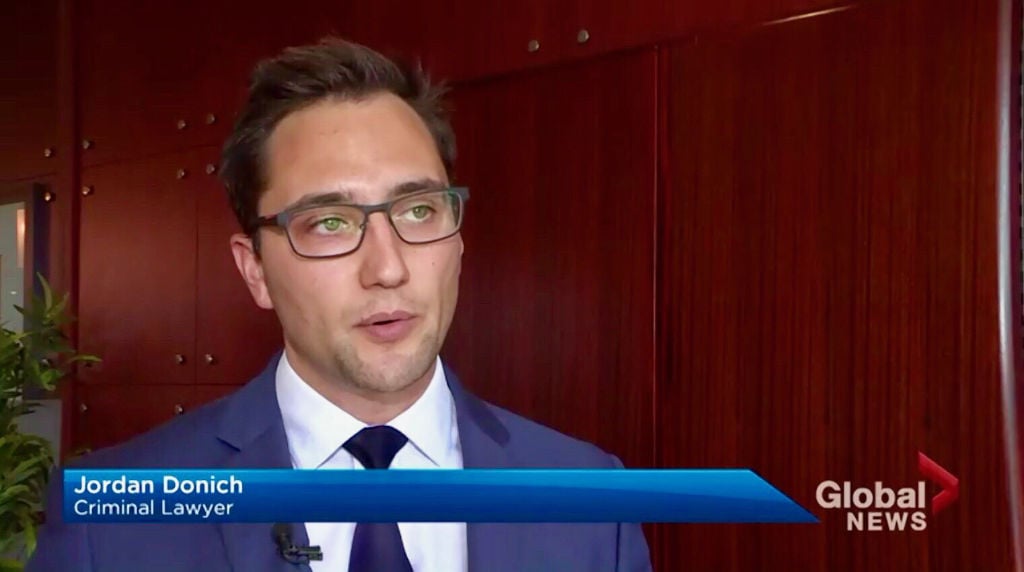
Global News
New Changes to Pardons in Canada.
Recent Law
R. v. N.L., 2021 ONCPA 18
In the case of R. v. N.L., the impugned accountant was being investigated and prosecuted by the Discipline Committee for failing to cooperate with the Standard Enforcement Department regarding a complaint it had received about the accountant’s practice. The accountant had since retired and was no longer practicing. CPA Ontario indicated that they had properly notified the accountant of the complaint and indicated he had confirmed over the phone that he was aware of it. Despite being made aware, the accountant never provided a response to the allegations, citing health issues.
As a result of his failure to respond to the allegations, the Professional Conduct Committee alleged professional misconduct in the form of failing to cooperate with the investigation. The matter was referred to the Discipline Committee for prosecution. After reviewing the file, the Discipline Committee found that the accountant had committed professional misconduct by failing to provide a response to the Standards Enforcement Department. Despite the accountant being retired, the Discipline Committee issued a penalty. The penalty included a written reprimand, a $5,000 fine to be paid within 30 days, and an order that the accountant respond to the Standard Enforcement Department regarding the initial allegation within 30 days, failing which the accountant’s


Related Content

Getting a Complaint
You are required to cooperate with the College.
Get a Lawyer Early
If you are getting Counsel do it before you make things Worse.

Responding to Complaints
Your Response will impact the Discipline process.

Penalties for Professionals
Findings of Misconduct can lead to License Revocation and Fines.
About the Author

Jordan Donich
Jordan Donich has been a Lawyer for over 10 years and is a trusted legal analyst by Canadian Media. He is as a leader in Canada’s tech sector for lawyers and developer of Law Newbie. Jordan is a Black Belt with the Japan Karate Association and trained in Krav Maga. He won a Gold Medal at 2004 Canadian National Championships and was published in the National Newspaper Awards.
Jordan has been featured in Forbes, Canadian Lawyer and is a member of DMZ Angels in Toronto.